CASE STUDY:
DESTINY 2
Company: Bungie/Sony | 2020-2026
Role: Staff User Experience Designer
As a Staff UX Designer at Bungie, I owned the end-to-end UX design for the Commerce and Rewards teams on Destiny 2, a cross-platform, live-service first-person looter shooter game for PC and console. I partnered with teams across Bungie to make earning, collecting, and purchasing in the game feel intuitive and rewarding so players could focus on the fun of saving the universe with crazy weapons and space magic.
Highlights
Following the launch of Monument of Triumphs, player counts exceeded 164k+ and brought new and old players back to replay legacy content and revisit old favorites. Players and critics claimed that the release delivered incredible value.
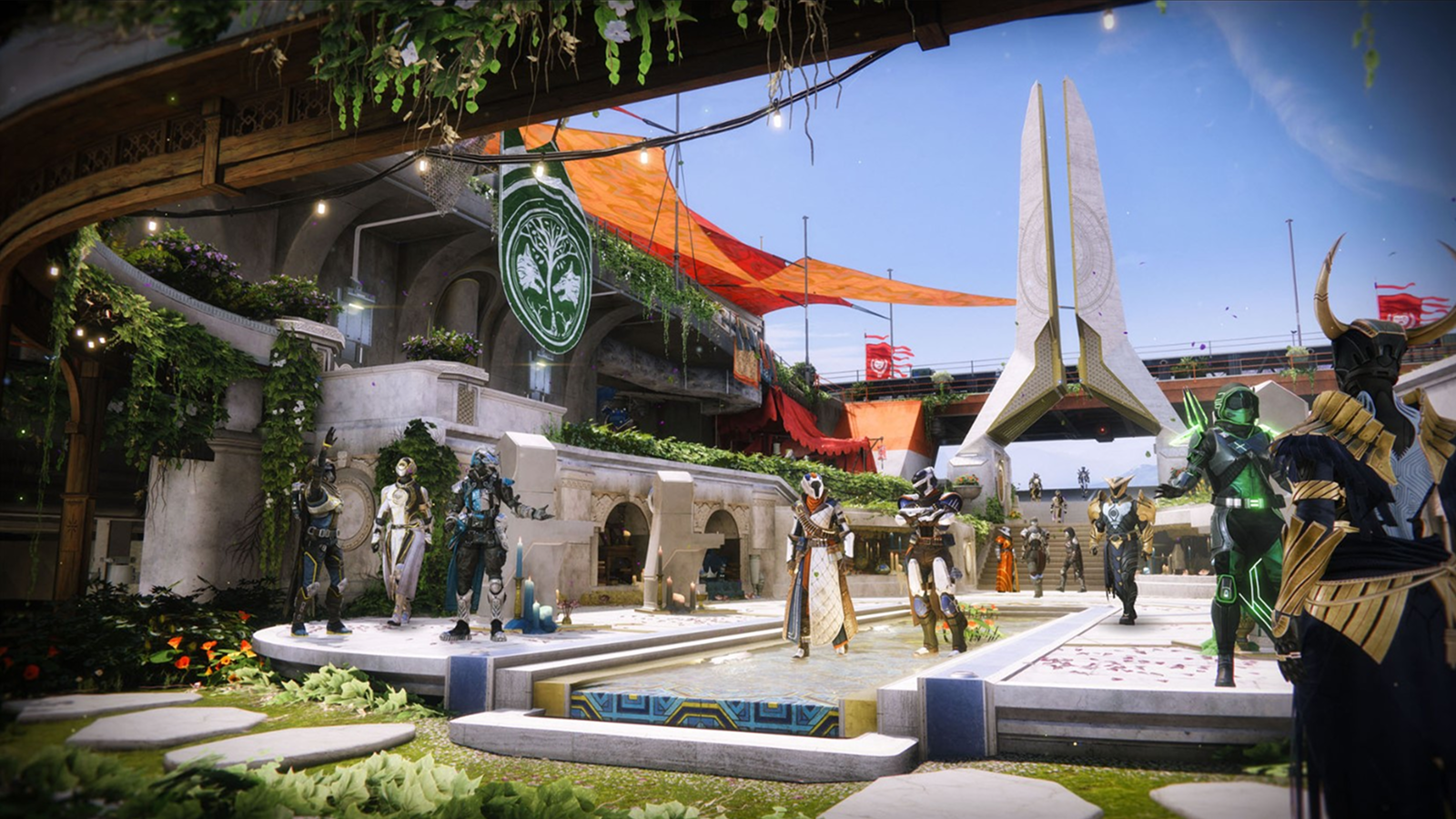
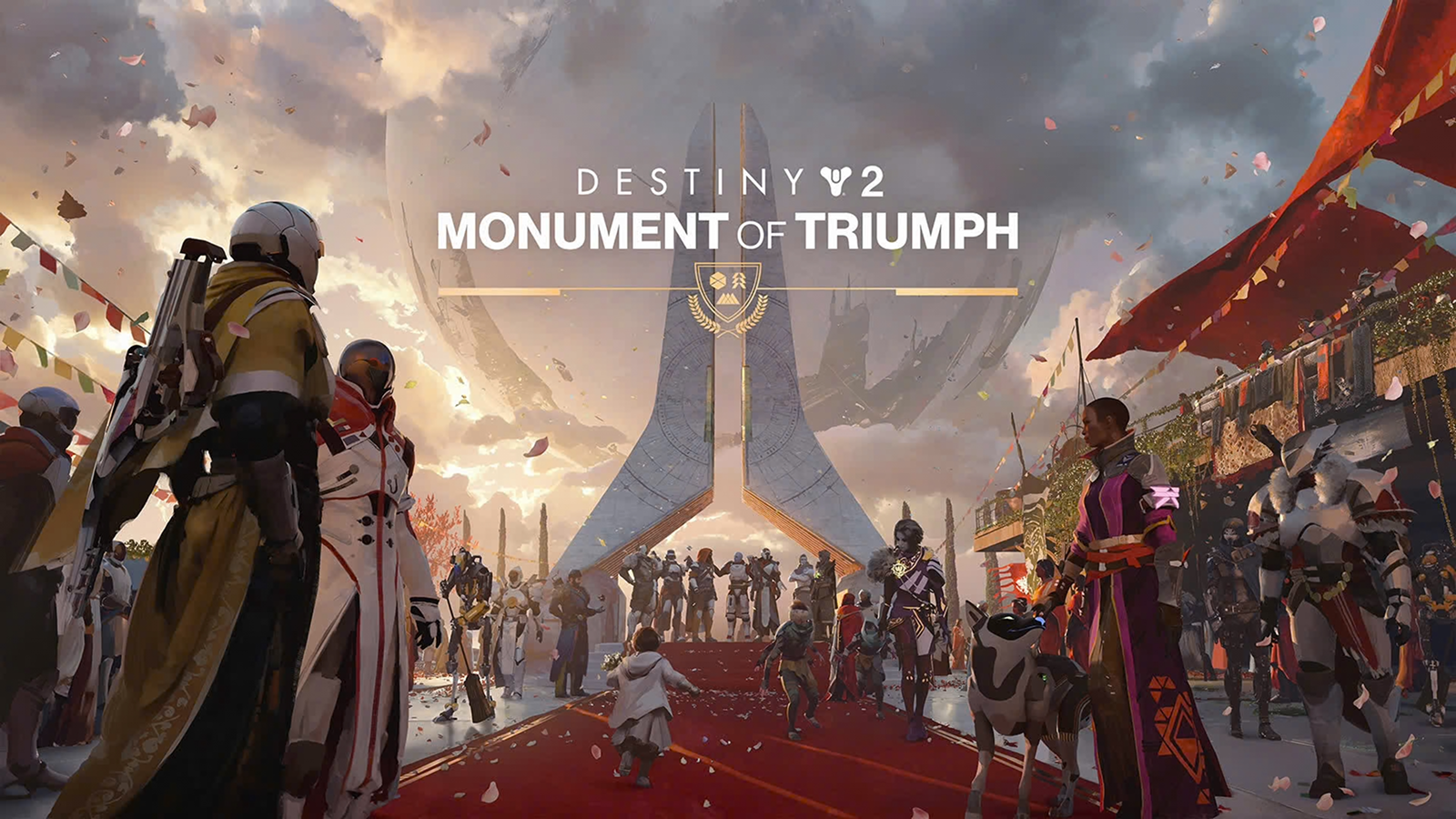
Final art and layout for the Monument of Triumphs in the tower, created by the Destiny 2 world art team.
The Process
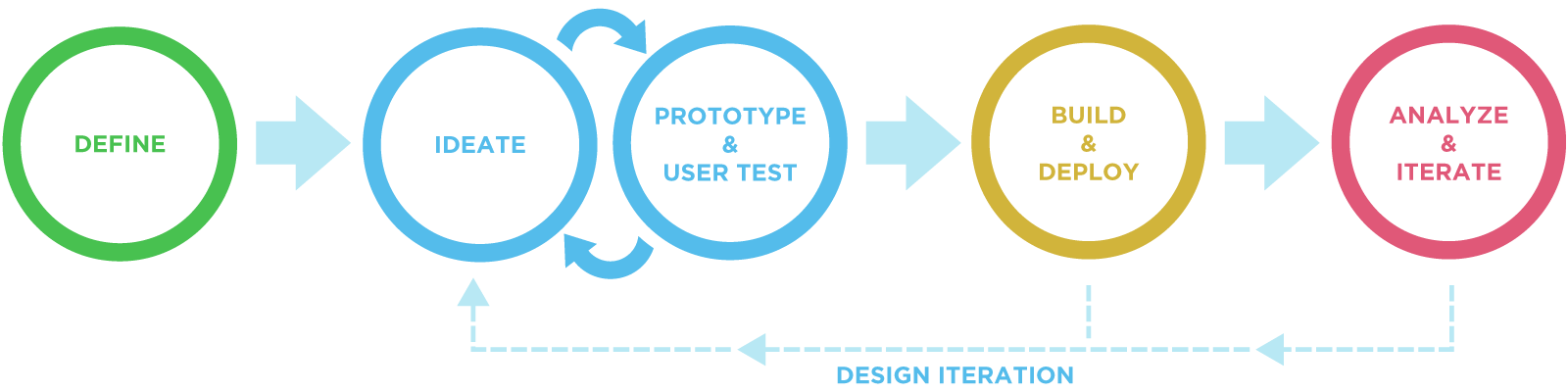
I worked with leadership, design leads, and cross-functional teams (feature leads, visual designers, UX/UI tech designers, engineers, artists, investment, QA, and producers) to align on creating clean, intuitive experiences that exceeded player expectations and hit our business goals.

MONUMENT OF TRIUMPHS
The Problem
After the last campaign release, Destiny 2 was rapidly losing players, so a decision was made to end live support and create one last big release for players.
The game needed some kind of memorial where players could complete triumphs, earn currency, and purchase rewards.
The player journey needed to be intuitive, motivating, and worthy of the time they had invested.
Players needed to quickly understand what they had earned, what they could pursue, and where to go next.
The feature needed to display a very large amount of loot and rewards without it becoming an overwhelming or sparse vendor experience.
We needed to create this system in an extremely short turnaround time with very little support.
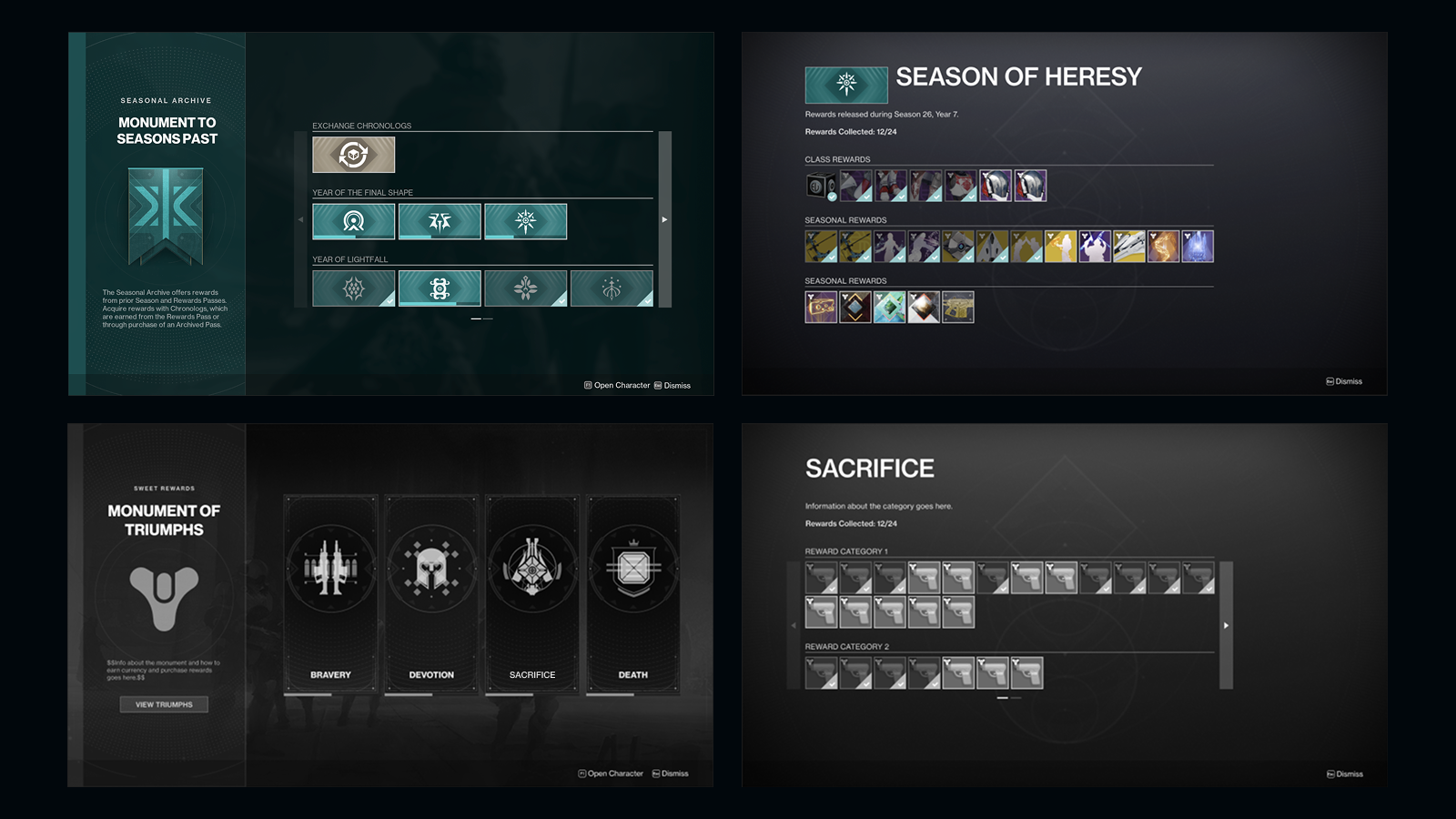
Early wireframes exploring how the Monument to Seasons Past framework, an experience we built on the Commerce team, could be adapted for the new Monument of Triumphs experience.
The Goals
Create a space where players can complete triumphs, earn currency, and purchase rewards.
Completing triumphs in the Monument of Triumphs should feel rewarding to players.
Completing the Seal and Title for Monument of Triumphs should feel earned.
Monument of Triumphs should be a fun and engaging experience to complete, not a grind.
It should be easy for players to find and easy to navigate.
Players should feel good about completing triumphs, but not feel like they have to complete them all.
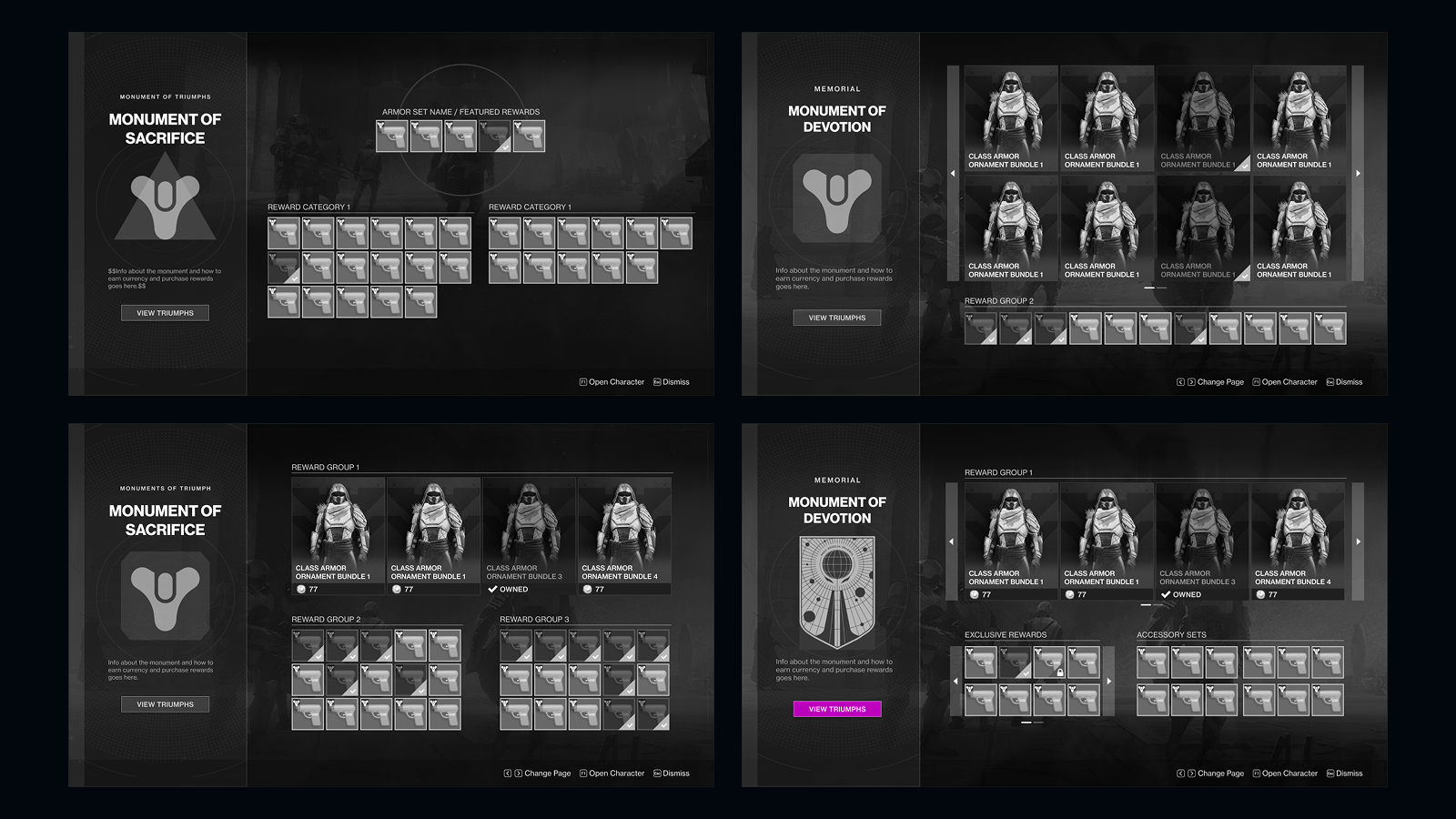
A few of the many wireframe explorations I created for the Monument of Triumphs main screen.
What I Did
Worked with leadership, design leads, and cross discipline teams to quickly define the “Why” and align on the necessity and priority of the work.
Created a UX document with solid goals, strategies, and executions. An important piece to this document is the Feedback & Questions section, which explores topics like UX, player sentiment, accessibility, engineering feasibility, and the new user experience.
Quickly audited the games frameworks and patterns to explore what we could use with the least amount of engineering.
Created and iterated on multiple layouts, flows, and Figma prototypes for leadership and design leads to evaluate and select the strongest direction.
Worked with investment and tech designers to make sure the different layouts and flows were possible to implement.
Worked with the leads, environment artists, and visual designer to insure that the theming and experience would surprise and excite players.
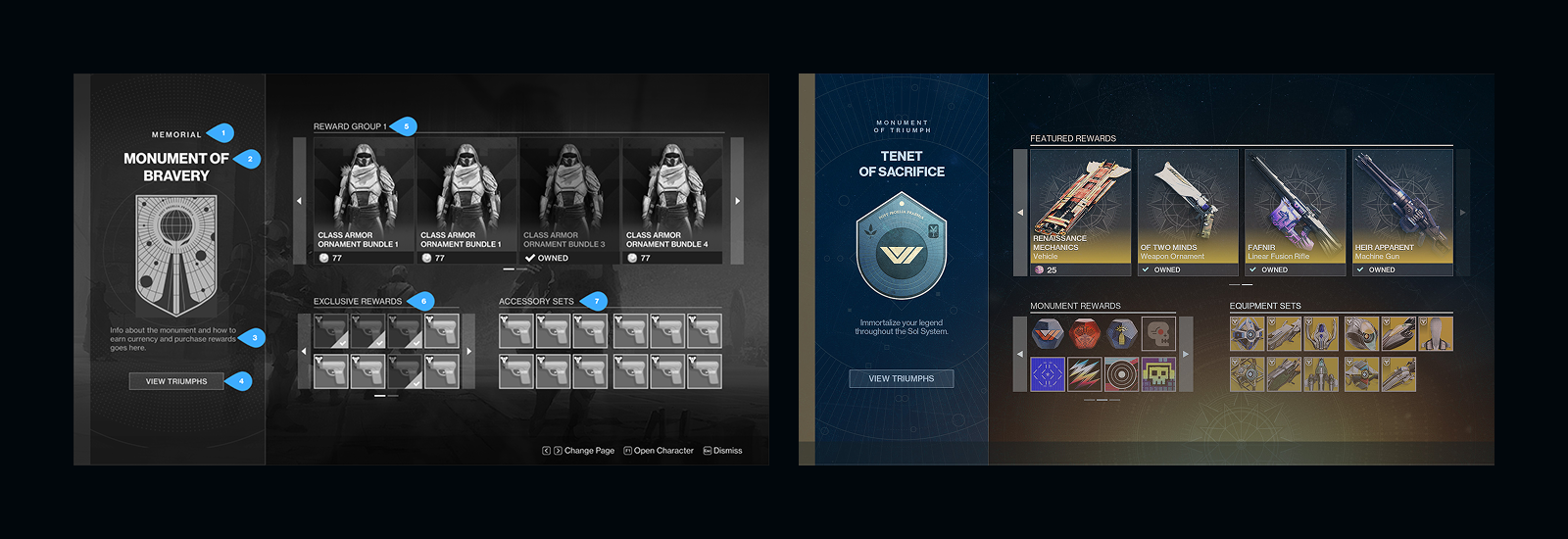
UX markup I created for tech design and QA evaluate implementation feasibility, alongside visual designer Alex Griendling’s final art pass for the Monument of Triumphs screen.
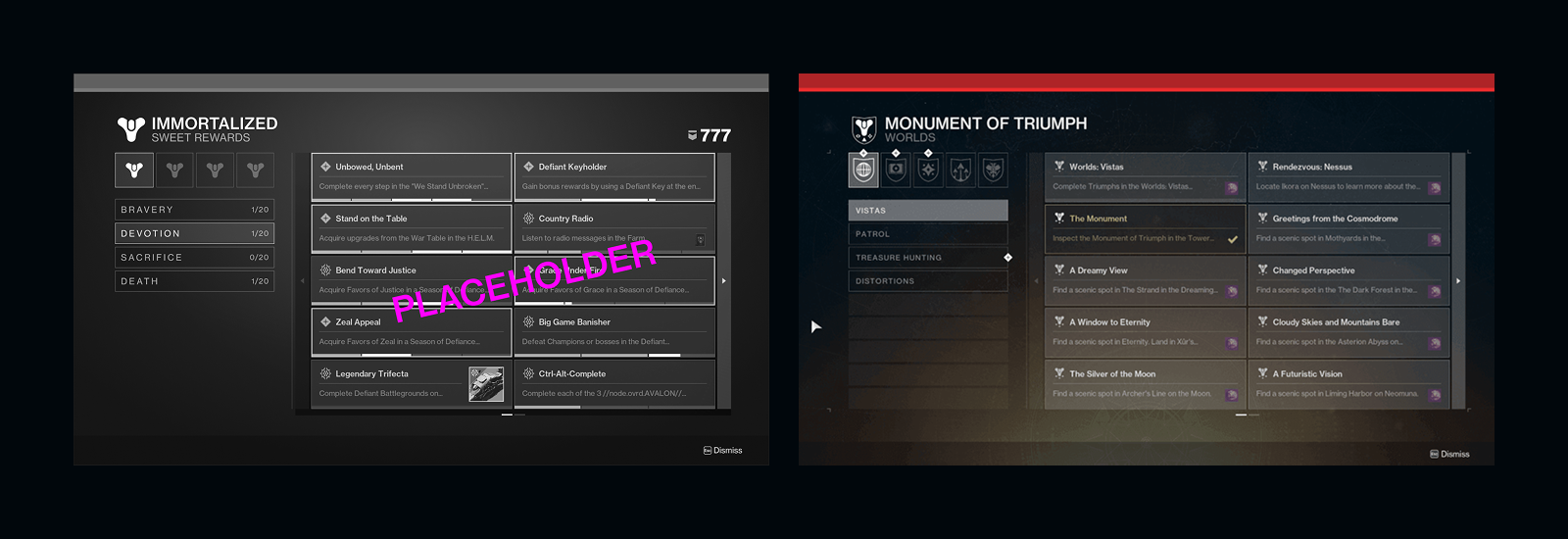
A rough early wireframe I created for the Triumphs screen using shared components and existing frameworks, alongside visual designer Alex Griendling’s final art pass for the Triumphs screen.
The Challenges
A large portion of the studio didn’t know any of this feature work was happening, so cross team collaboration and user research was limited. Thankfully, we had our teams and QA to playtest the builds.
I had to work with the UX craft lead to get approval from leadership for the UX team to be read-in so that we could very quickly discuss and iterate on the designs.
It was a very fluid design process as the details and list of vendors/tenants and rewards changed regularly as we worked to get it completed in an extremely compressed timeline.
I was balancing this work alongside closing out Commerce features and supporting development on Marathon.
The situation affected each coworker and team differently, so I tried to lead with honesty and optimism while helping the team create an experience we could be proud of that honored the players we cared about.
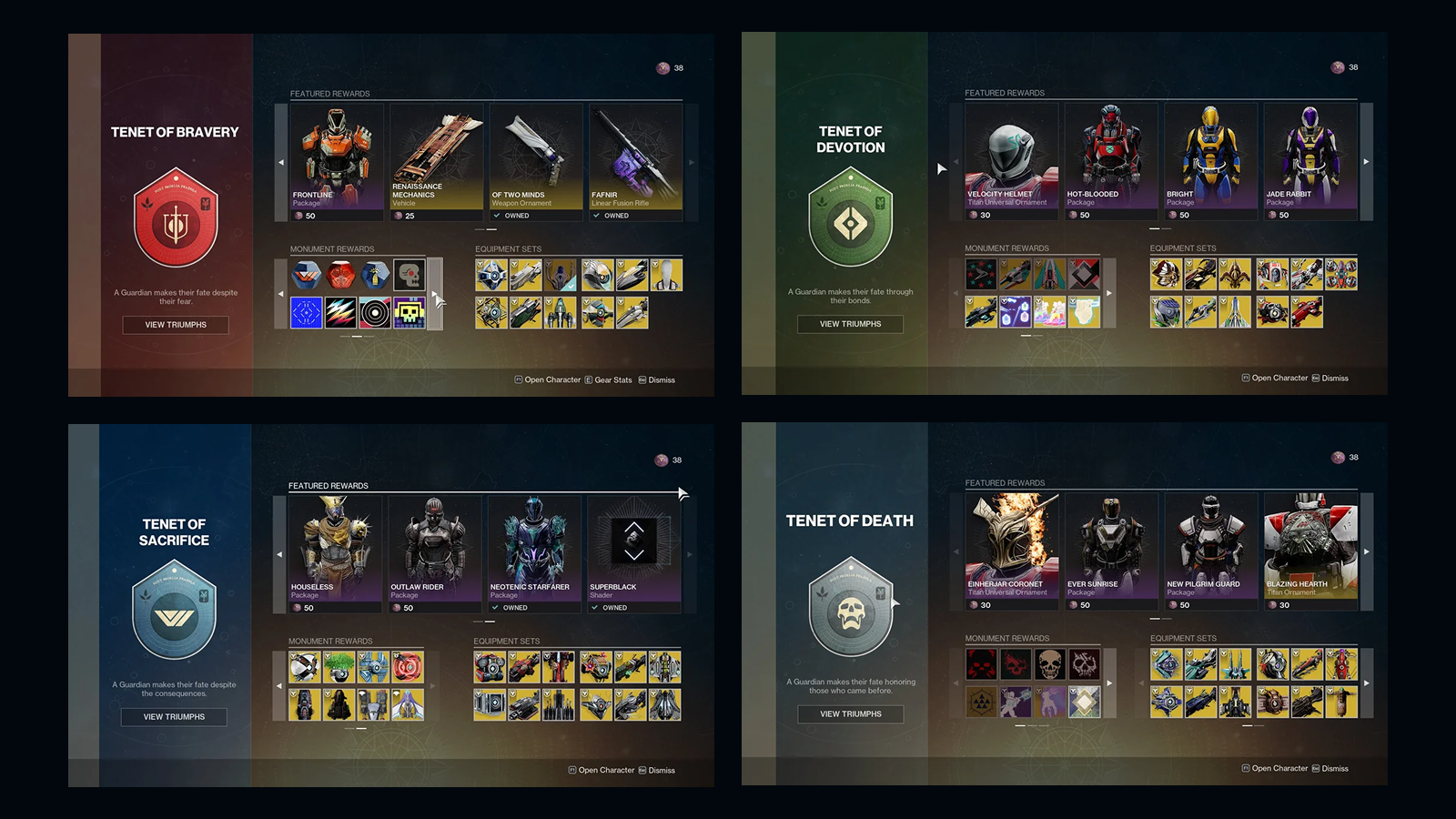
Final in-game art and theme of the four different vendors/tenants used for the Monument of Triumphs in the tower, created by visual designer Alex Griendling.
The Results
It was a successful launch. Player counts exceeded 164k+, more than last years campaign expansion Edge of Fate.
Players loved the nostalgia. The Monument of Triumphs, new tiered loot, and many rewards brought players back to replay and enjoy legacy activities and revisit old favorites.
Players loved the experience. Players and critics claimed the release delivered incredible value with earnable cosmetics, loads of loot, and refreshed old activities.
Consolidating complex progression systems into a single, intuitive interface, made it easy for new and returning players to engage with the system, plan their playtime, and earn sweet loot.
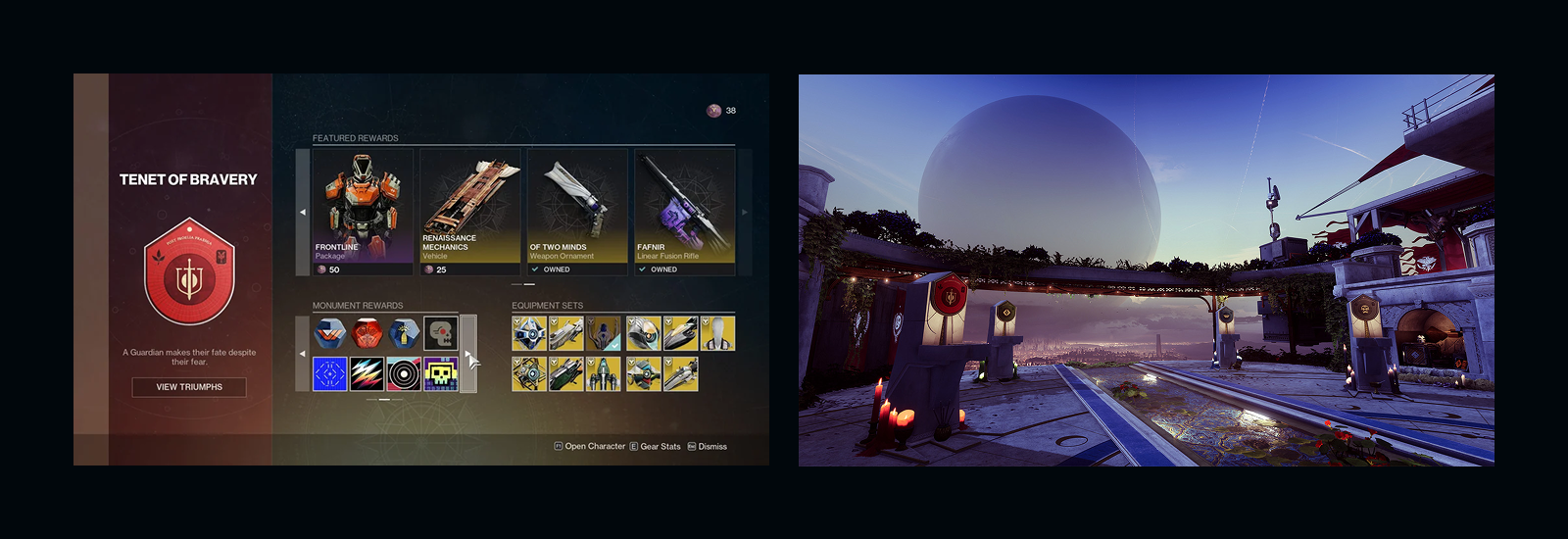
Final art of the the Monument of Triumphs screen, created by visual designer Alex Griendling, alongside the physical 3D monument in the Tower, created by the world art team.
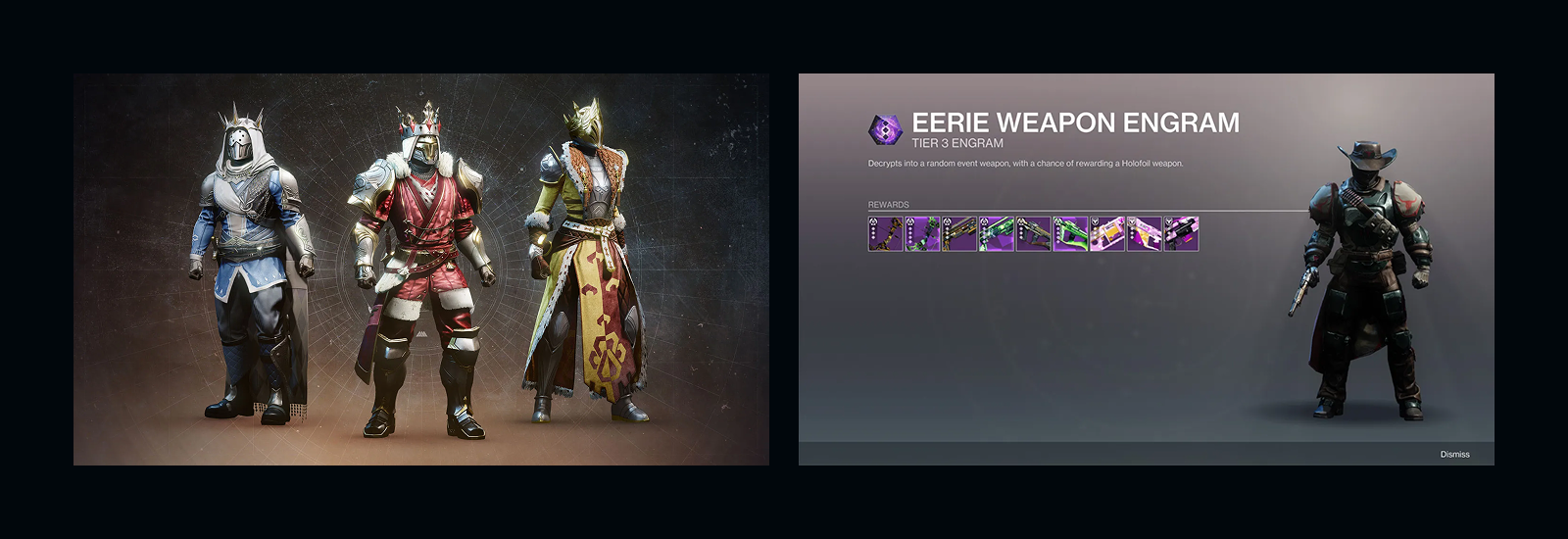
Some of the many sweet rewards players were able to earn from completing triumphs in the game, art and designs created by the Commerce team.
Impact and Takeaways
The release brought players back and strengthened player sentiment by delivering a nostalgic, player focused tribute to Destiny 2’s history. Although it was a bittersweet release, I’m incredibly proud of all that we, as a team, accomplished in such a short time. We were able to use existing frameworks that the Commerce team and I had built for Monument of Seasons Past to create an experience that was immediately familiar to players, allowing them to jump right into the content without unnecessary friction.
My time at Bungie challenged me to grow as a designer by helping teams navigate complex UX problems, shaping larger systems, building scalable design patterns, and leading and mentoring others. It was an honor to contribute to Bungie’s legacy and the Destiny universe.

CASE STUDY:
WWE SUPERCARD
UX Design for a mobile collectible card battling game.
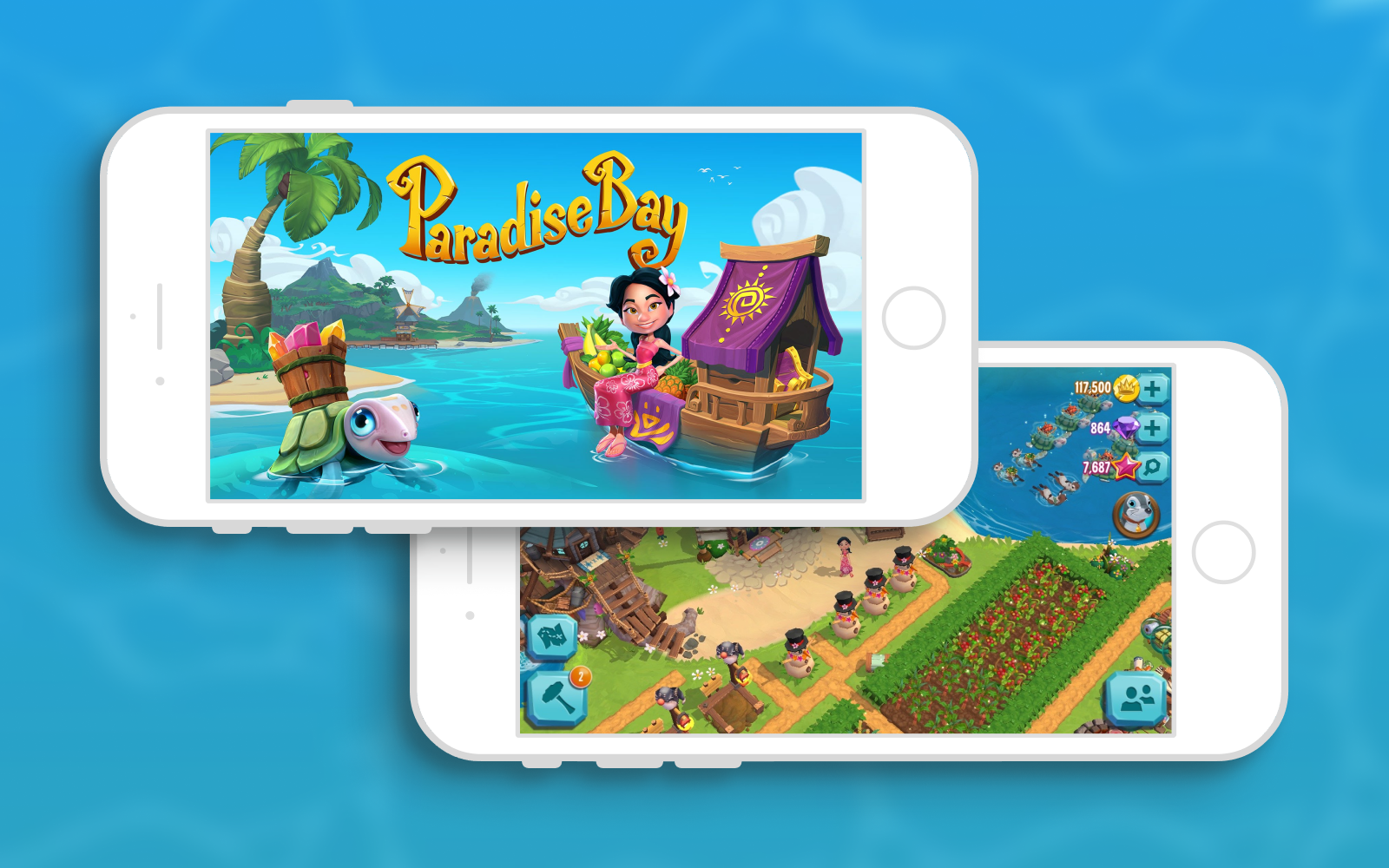
CASE STUDY: PARADISE BAY
UX Design for a cross-platform, responsive, resource management game.